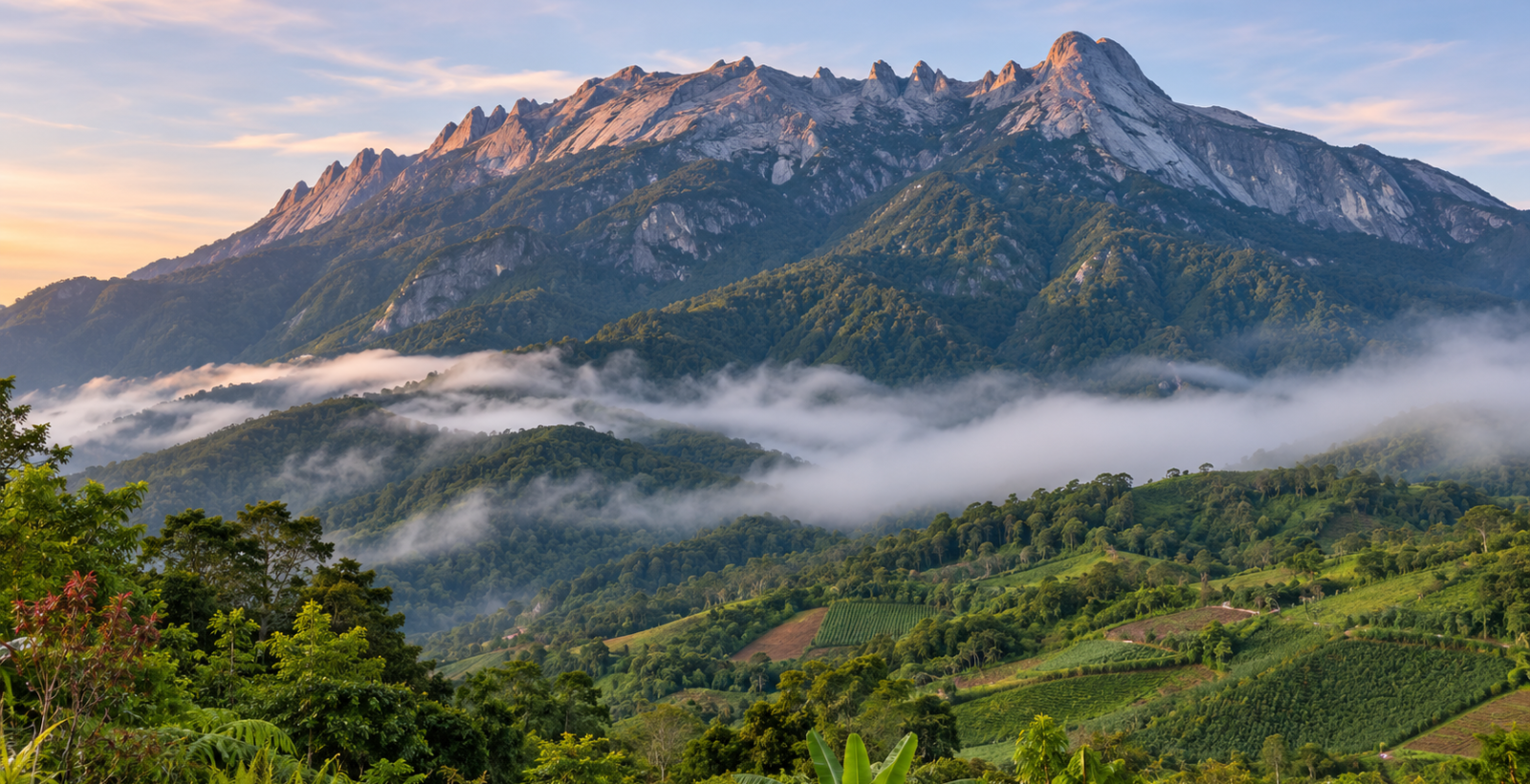
From the foothills of Sabah, Mount Kinabalu looks like a granite ridge rising out of a sea of green. Look more closely and you can see one of Malaysia’s most striking changes in landscape. The mountain reaches 4,095 metres, and the habitats around it change markedly with elevation.
A mountain with several kinds of forest
Kinabalu Park contains tropical lowland and hill rainforest, mountain forest, and subalpine forest and scrub higher up. The differences are visible from a distance. Dense foliage covers much of the lower terrain, while the upper slopes open onto exposed rock.
The granite began underground
The summit’s distinctive rock is part of a granite intrusion. UNESCO describes the granite as having formed around 15 million years ago before being pushed upward much later by tectonic movement. That history gives the pale, exposed ridge a very different appearance from the forested slopes below.
The next time you see a picture of Kinabalu, look from the bottom up. Start with the forest, follow the slopes into the thinner vegetation, and finish at the bare granite. You can read much of the mountain’s story in that single view.